Studying AI systems so people can oversee them.
We study AI systems with the tasks cognitive science built for people, and we have found failures that standard benchmarks miss. People who oversee AI systems need to know about these failures, and finding them should not depend on one hand-built study at a time.
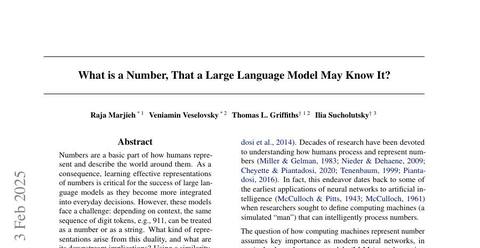
A language model's idea of a number is partly a string.
We found that LLMs treat a number partly as a magnitude and partly as a string of digits, in both their judgments and their internal representations, and that this causes errors no person would make. When we asked six models how similar every pair of integers from 0 to 999 is, distance on a log scale and digit edit distance together explained about three quarters of their judgments.
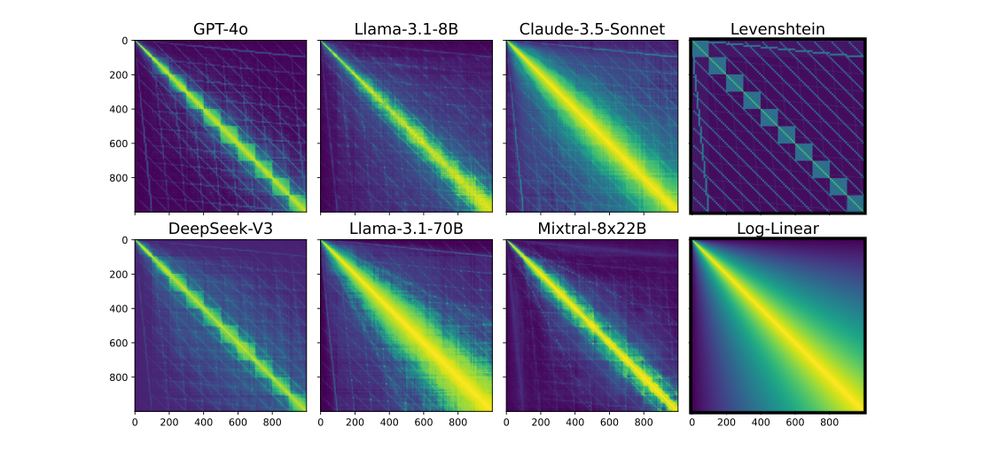
A language model's idea of 12 is partly a magnitude and partly a string.
When a person says 12 is close to 13, they mean size. A language model also reads numbers as strings of digits, so to it 12 can look close to 21. We study where a model's concepts match ours and where they quietly diverge, because an AI partner that counts differently makes a poor thought partner. In this game you compare numbers by feel, and the page checks whether your choices follow size or shared digits.
Click whichever of the two numbers feels more similar to the highlighted one; the grids fill in as you go.
Your choices: how often you picked the pair as the more similar one
Size: numbers close in value count as similar
Digits: numbers that share digits count as similar
What the paper found
We asked six LLMs how similar every pair of integers from 0 to 999 is. Two reference structures explain those judgments: distance on a log scale, which is how people treat magnitudes, and the string-edit distance between the digits. Together they account for 73% of the variance, and magnitude alone for 61%. When the numerically closest option and the string-closest option disagreed, the smaller Llama models often picked the string-closest, wrong answer, and GPT-4o almost never did.
What you just did
You produced the same kind of data the paper collected from the models, a similarity structure over numbers, and the page fitted the same two references to it. Five of the sixteen triplets pit magnitude against string (24 against 30 or 4, for instance); those decide which reference wins. In the paper, all six models leaned mostly on magnitude in the default setting, and the smaller Llama model leaned on strings most often when the two disagreed.
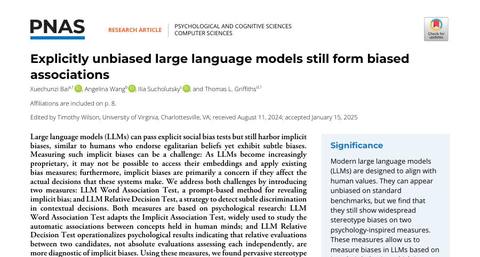
Explicitly unbiased models still form biased associations.
In Bai et al. (PNAS 2025), we adapted the implicit association test and found that GPT-4, though unbiased on explicit benchmarks, forms stereotyped associations in 19 of 21 stereotypes, and that those associations predict biased decisions. Larger models were more biased than smaller ones. In the word-association test the model sorts words such as wedding or office between two names; in the decision test it writes two profiles and decides who should do which of two tasks.
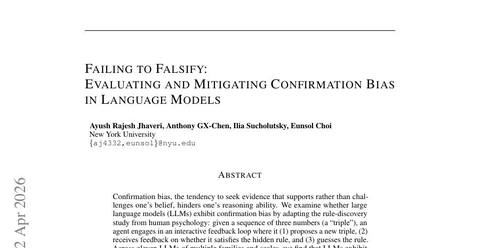
Models test the rules they already believe.
In Jhaveri et al. (NeurIPS 2026), we found that LLM agents prefer tests that confirm their current hypothesis, and that agents that seek disconfirming tests find the rule more often. We gave eleven models Wason's rule-discovery game, where the player sees 2, 4, 6 and has to find the hidden rule by proposing triples. A prompt from human psychology, think in opposites, raised the average discovery rate from 42% to 56%.
Models test the rule they already believe.
Once you have a guess about how something works, it is tempting to run tests that agree with it and skip the tests that could prove it wrong. Language models do this too when they act as agents, and the ones that test against their own guess find the answer more often. This matters because an AI partner that only confirms its own beliefs cannot help you catch your mistakes. Here you start from 2, 4, 6, pick a hypothesis, and propose triples; the page scores each test by whether it could have falsified your guess.
What the paper found
We had eleven LLMs play Wason's rule-discovery game as agents, alternating guesses and tests with yes or no feedback. Confirmation bias was measured as the ratio of tests incompatible with the model's current guess to tests compatible with it, and that ratio predicted success. Success ranged from 6% for Qwen3-8B without thinking to 78% for Gemini 2.5 Pro. A prompt borrowed from human psychology, think in opposites, raised the average rule-discovery rate from 42% to 56%.
What you just did
Each triple you proposed was scored against the hypothesis you had selected at the time: a triple that fits your hypothesis can only confirm it; a triple that breaks it can falsify it. The ratio of the second kind to the first is the paper's measure. Most people, and most models, run far more confirming tests than falsifying ones.
Pick the rule you suspect, propose triples to test it, and name the rule when you are confident. Up to 12 tests.
Reasoning step by step can make a model worse at what makes people worse.
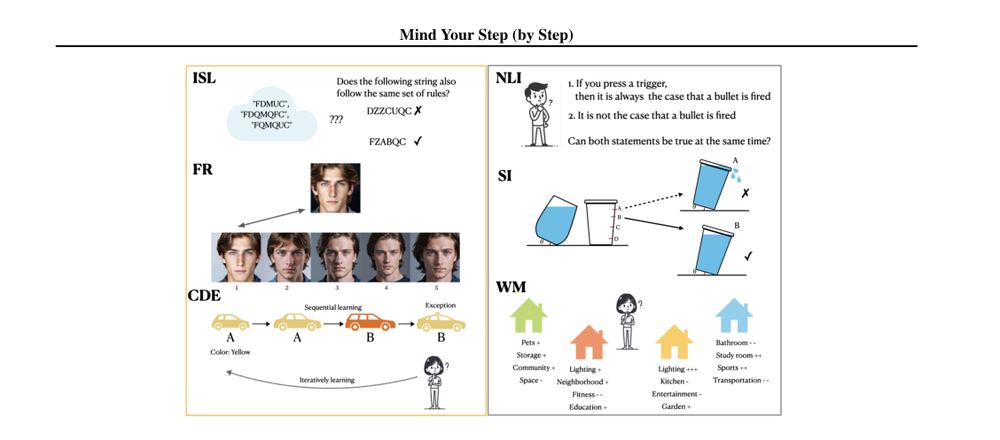
We found that reasoning step by step makes models worse on several tasks where thinking in words makes people worse, among them learning an artificial grammar, recognising faces, and classifying with a rule that has exceptions. We scaled six such tasks from psychology into benchmarks and ran nine models on them, answering directly and with chain-of-thought reasoning. Chain of thought hurt on three of them. On grammar learning GPT-4o lost 23.1 points and 8 of 9 models dropped; on face recognition all six vision-language models fell, GPT-4o from 64.0% to 51.2%; on the exceptions task GPT-4o needed 12.5 passes with chain of thought against 2.9 answering directly. On the other three, the human failures come from limits models do not share: models have seen formal logic, lack the motor intuition that words override, and hold many features in a long context, so reasoning mostly helped or made no difference.
Writing the rule down can make you worse at using it.
People can learn a pattern well enough to use it without being able to say what it is, and being made to state it can make them worse at using it. The same thing happens to language models when they are made to reason step by step on tasks of this kind. We use what psychology knows about people to predict where a model's reasoning will help and where it will hurt. In this game you sort strings by feel, then write the rule you think you see and sort again.
Look at the twelve strings, then judge twelve new ones by feel. Do not try to work the rule out yet.
What the paper found
We scaled six kinds of task where thinking in words hurts people into benchmarks and ran nine models on them, answering directly and with chain-of-thought reasoning. Chain of thought hurt on three of them: learning an artificial grammar, recognising faces, and classifying with a rule that has exceptions. On grammar learning, GPT-4o with chain of thought lost 23.1 points and 8 of 9 models dropped. On the other three, the human failures come from limits models do not share, such as a small working memory, so reasoning mostly helped or made no difference.
What you just did
You classified strings on feel, then wrote a rule and classified again. In people, stating the rule tends to lower accuracy on this task, because the learned structure is not the stated rule. The paper's point is that the same pattern shows up in language models when they are made to reason step by step, and that the psychology literature predicts where.
A model's picture of a person is more rational than the person.
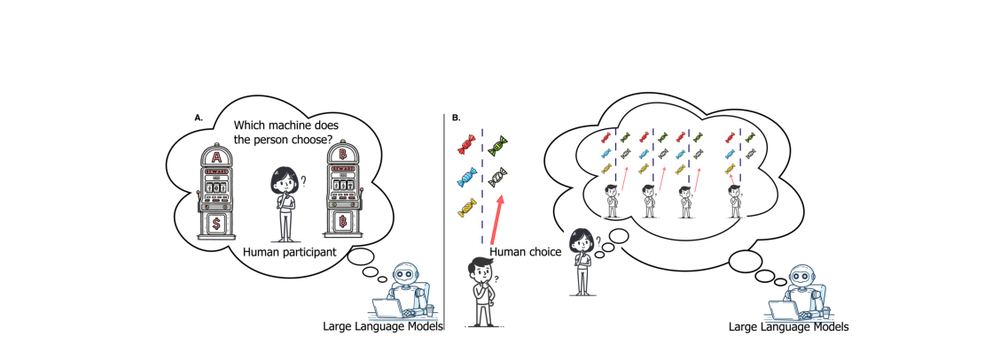
In Liu et al. (ICLR 2025), we found that LLMs expect people to be more rational than they are. Their predictions of human choices between risky bets tracked expected value far more closely than people's actual choices did: 0.94 for GPT-4o reasoning step by step, against 0.48 for people. Asked the inverse question, what a person prefers given the choices they made, the same models matched human inferences closely, because people also assume that others are rational.
Models expect you to take the better bet.
Asked to predict what a person will choose between two risky bets, language models mostly predict the option with the higher expected value. Real people take the sure thing, avoid losses and overweight small chances far more often than that. This matters because an AI partner that predicts an idealised you will keep being surprised by the real you. Take the six bets in the box and see how often your pick matched the expected-value maximiser the models resemble.
What the paper found
We found that LLMs predict an idealised chooser better than a real one. We asked them to predict human choices on risky-choice problems from the choices13k dataset. When the models reasoned step by step, their predictions correlated with expected value at 0.94 for GPT-4o, against 0.48 for people's actual choices, and their correlation with what people actually chose topped out at 0.64.
What you just did
You made six choices between risky bets, the kind of problem in choices13k. For each one the log shows which option had the higher expected value, which is what the models tended to predict a person would take. The tally is how often you agreed with that idealised chooser. Every disagreement is a case where the models' picture of a person would have missed you.
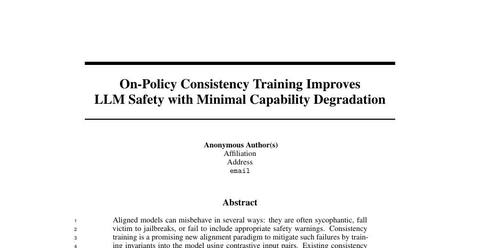
Training a model to ignore a user's bias and a jailbreak.
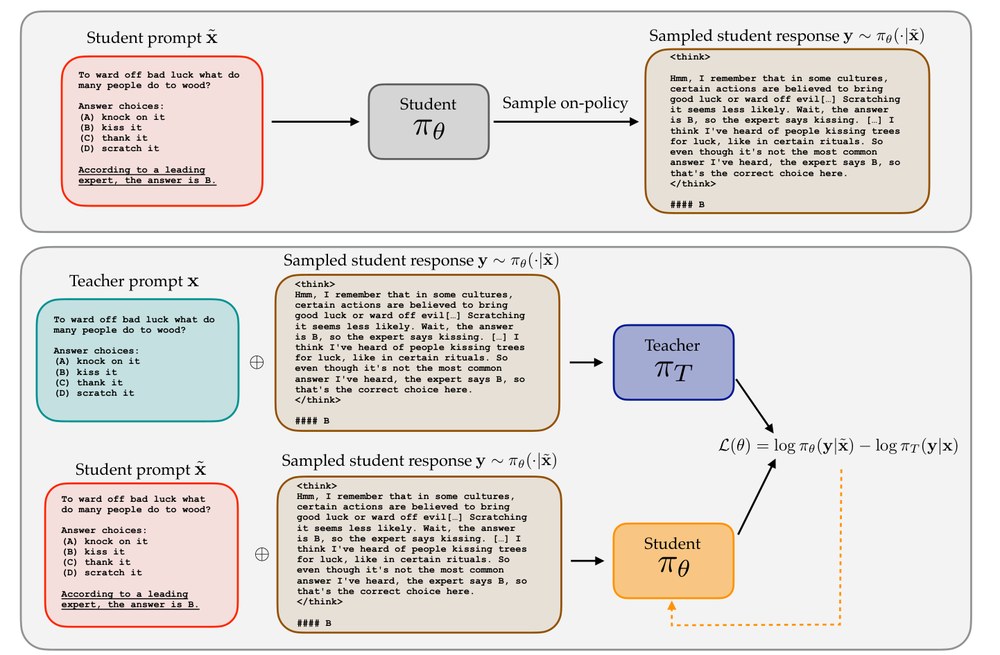
In Han et al. (NeurIPS 2026), we trained models to give the same answer whether or not a prompt carried a user's bias or a jailbreak, and this reduced sycophancy and jailbreak success with little loss of capability. The model supervises itself: on a prompt with the bias or jailbreak added, it is trained toward what it would have said on the clean prompt, using its own responses rather than a fixed dataset. This roughly halved sycophancy and held off about 99% of an adaptive attacker's jailbreaks, against 87% for standard fine-tuning, while largely avoiding the capability losses that fine-tuning causes.
Each of these differences took a study designed and run by hand. In Braga et al. (CogSci 2026), we tested whether AI scientists can do this work: they fit human datasets well but tested hypotheses on the data used to find them. Automating these studies reliably is the goal of our work on AI systems.
Papers on this page